Castello Brothers – Domain Names For Sale – Premium Domain Names Premium Domain Names For Sale

This is the most important move Apple has made for domain names since they sold Safari to Google.
Back in 2011, shortly after Steve Jobs died, Apple made what was arguably both a brilliant and disastrous decision: it sold Safari’s search functionality to Google for roughly $1 billion annually (reportedly $20 billion in 2022). From a revenue standpoint, the deal was undeniable. From a strategic standpoint, it quietly reshaped how the internet works.
Steve Jobs understood power. He also understood restraint. As aggressive and visionary as he was, Jobs was acutely aware that Apple—already a technological juggernaut—could one day be viewed as a monopoly. That awareness informed many of his decisions, including how Apple interacted with the web.
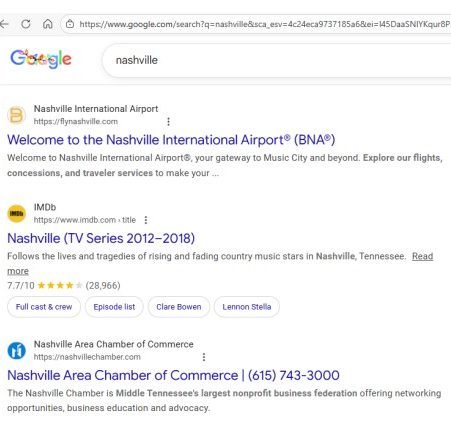
Before the Google alliance, Safari behaved differently. If a user typed a simple word—say, Nashville—Safari didn’t immediately funnel that intent into ads and search results. Instead, it first attempted to resolve the word as a destination. Nashville became Nashville.com. This mirrored the internet’s earliest principles, when navigation was direct, human-readable, and trust-based—closer in spirit to protocols like Gopher or early Boolean search.
After the Apple/Google deal, that changed. Typing “Nashville” no longer pointed you toward a destination—it delivered a monetized results page filled with ads, trackers, and intermediaries.
So, the question lingers: did Jobs overlook a billion-dollar opportunity by not fully monetizing that behavior himself? Or did he understand—perhaps better than anyone—just how powerful and foundational domain names really were?
I believe it was the latter.
Fast forward fourteen years, and Apple has quietly come full circle.
With its latest iOS and iPhone updates, Apple has made a subtle but profound change: Safari now places the domain name front and center—always visible, stripped of noise, tracking strings, and deceptive clutter. Just the domain. Nothing more.
Why now?
Because the internet is drowning in fraud.
Scammers and spoofers have steadily undermined trust online, exploiting long URLs, hidden redirects, tracking parameters, and misleading sub-domains. For decades, .com domain names served as an intuitive trust signal. Type Disney.com, and 99% of users felt comfortable entering personal and financial information. The domain itself was the verification.

But modern links—especially those originating from search engines and social media—are often impossibly long, obscured by tracking tokens and database tails. Even seasoned internet users are vulnerable.
I’ve been online since the 1980s—from intranets to the early public internet—and I was nearly fooled myself.
I once received an email from Wells Fargo, an email I was actually expecting. I clicked the link. The page looked perfect: correct logos, familiar layout, everything. The URL began with www.wellsfargo.com, stretching far beyond the visible width of the browser. I started entering sensitive information—Social Security number, credit cards, financial details. I was moments from clicking “Submit.”
Something made me pause.
I scrolled back and examined the full URL carefully. What I realized was chilling: the real domain—buried deep, later in the string—ended in .kr – Korea!
The fraudsters had hidden behind a trusted name using several subdomains.
This is precisely why Apple’s move matters.
By elevating the actual domain name—and only the domain name—to the top of the browser, Apple restores clarity, intent, and trust. The domain name is viewable on every page. It makes deception harder. It puts the destination and trust back in the driver’s seat.
A domain name is not just branding. It is identity. It is verification. And now, Apple Safari implicitly confirms that identity before you engage.
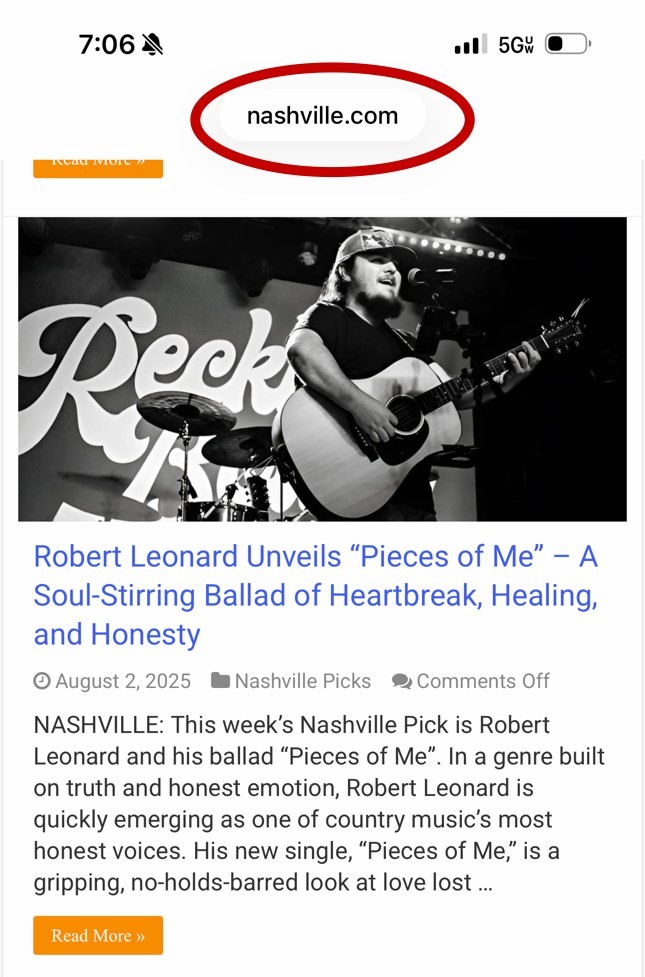
The domain name should always be front and center—before a click, before a transaction, before trust. With this change, Apple has taken a meaningful step toward restoring balance to an internet that, for over a decade, allowed trust signals to be buried beneath monetization layers.
The companies that derive revenue from the internet depend on its reliability and trustworthiness. By re-centering the domain name, Apple is helping preserve the very fabric upon which the free and open internet was built.
And in doing so, Apple has quietly reminded us of something fundamental:
When trust is on the line, the domain name matters most.